


C++ and Rust at the top of growth: what C++26 changes for energy and parallelism
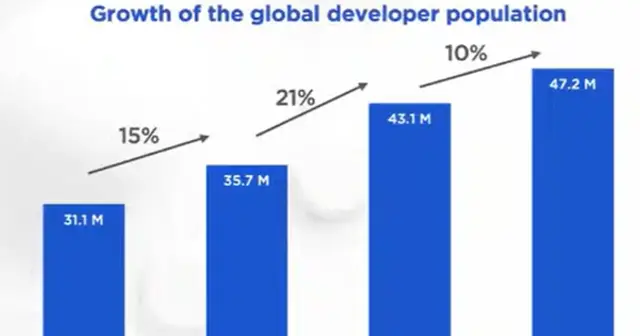
Herb Sutter's post identifies C++ and Rust as the leading languages that grew most from 2022 to 2025, linking the trend to energy consumption and the hardware parallelism planned for C++26.
By Wendelmaques Pereira · Updated today
Source: Por que C++ e Rust cresceram mais entre as grandes linguagens, segundo Herb Sutter (herbsutter.com). Text prepared with AI from this source.
What happened and what to do
Herb Sutter's post analyzes why C++ and Rust were the leading programming languages that grew most between 2022 and 2025. The argument combines adoption data with two factors: energy consumption and the parallelism features planned for C++26, such as SIMD types and std::execution.
For a company, the practical reading is that language choice and how parallelism is used start to weigh on energy cost and infrastructure performance. One path is to map which workloads (data processing, collection pipelines, local inference) are CPU-intensive, measure consumption and latency per service, and assess whether critical sections would benefit from rewriting or from libraries with SIMD and parallel execution. It is also worth building a per-service compute cost dashboard, so decisions rest on numbers rather than market trends.
How the consultancy can help
Wendelmaques can diagnose your software estate and your company's processing workloads, measuring consumption, latency and parallelism bottlenecks. From that, it delivers a scoped improvement proposal and, where warranted, the implementation and operation of compute cost monitoring pipelines.
Next step
If your company wants to understand where language, parallelism and energy consumption affect your costs, send a short description of your case, with the systems involved and the problem observed. You will receive a scoped proposal for diagnosis and implementation.
Let's assess your project

I reply with scope and a proposal.