


Stealth browser automation via MCP repository: what changes for bot detection
An open source repository shows how AI agents can control real Chrome sessions via MCP and the Chrome DevTools Protocol, with navigation, network hooks and DOM extraction. The author claims it bypasses Cloudflare challenges.
Source: Stealth Browser MCP: automação de navegador para agentes de IA via MCP (github.com). Text prepared with AI from this source.
What happened and what to do
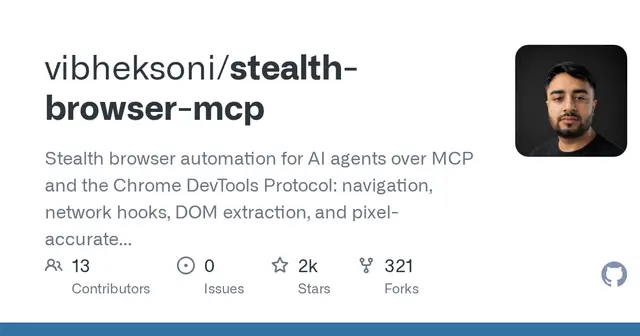
The open source repository Stealth Browser MCP provides stealth browser automation for AI agents, connected through the Model Context Protocol (MCP) and the Chrome DevTools Protocol. The tool offers navigation, network hooks and DOM extraction over real Chrome sessions. According to the author, it bypasses Cloudflare challenges, which makes the case relevant for anyone protecting sites and applications against automated traffic.
For a company, the practical point is to understand the risk surface, not to reproduce the technique. Agents with browser access can collect data from portals, test forms and trigger flows in ways that are hard to tell apart from real users. A response involves mapping which web assets receive agent traffic, instrumenting session logs and behavioral signals, and monitoring automation patterns in a dashboard. It also means reviewing rate limits, authentication on sensitive flows, and policies that separate authorized agents from unidentified clients.
How the consultancy can help
Diagnosis of how sites and APIs are exposed to browser agents, with a map of automated traffic, and implementation of monitoring for sessions, bot signals and access limits under the client's own infrastructure.
Next step
If your company wants to understand how browser agents affect your digital channels, send a short description of your case. With it, we prepare a scoped proposal for diagnosis and implementation.
Let's assess your project

I reply with scope and a proposal.