


AI and infrastructure news
Filter by type: All66
Unlocking FP/BF16 issue rate on RTX 3090 with gpu-unlock: what to measure before deciding
According to the post, the gpu-unlock project raised measured PyTorch throughput on an RTX 3090 from 75T to 135T, with a 360 W limit. The repository describes unlocking the FP/BF16 issue rate up to the level of professional cards.
- 17 days ago github.com
Booth: a compiler for multiple architectures
Booth is an open-source compiler for CUDA, Triton, and HIP, with support for different GPU and CPU architectures. Here is how a company can assess this compatibility in its computing environments.
- 17 days ago amazon.com
How to structure a CUDA programming learning path
In a publication dated November 9, 2025, an author recommends studying C/C++ and linear algebra before CUDA and suggests books and a course for getting started with GPU programming.
- 17 days ago developer.nvidia.com
How to overlap transfers and computation in CUDA
A March 27, 2026 post from the NVIDIA Technical Blog explains overlapping data transfers with computation in CUDA C/C++ to make better use of CPU and GPU time.
GPU computing: from architecture to optimization
An introductory article published on March 28, 2026, presents GPU architecture and computing as context for engineers developing or optimizing software for this hardware.
- 17 days ago
 hgpu.org
CuBridge explores LLMs for reconstructing CUDA attention kernels
Published on May 10, 2026, the text presents CuBridge, a framework that uses LLMs to understand and reconstruct efficient attention kernels in CUDA.
- 17 days ago developer.nvidia.com
CUDA C++: from a parallel example to a GPU test
In a post published on February 28, 2026, NVIDIA introduces CUDA C++ programming step by step through a simple parallel programming example.
- 17 days ago developer.nvidia.com
CUDA C++: first steps in parallel programming
In a post published on November 3, 2025, NVIDIA presents a step-by-step introduction to CUDA C++ through a simple parallel programming example.
- 17 days ago
 arxiv.org
CUDA-L2 automates HGEMM kernel tuning
An article published on December 15, 2025 presents an approach combining language models and reinforcement learning to optimize CUDA kernels for half-precision matrix multiplication.
- 17 days ago manning.com
CUDA for LLMs: kernels, attention and profiling
Published on February 3, 2026, Manning’s book introduces CUDA programming for NVIDIA GPUs, from basic kernels to Flash Attention, and covers profiling with Nsight Compute.
- 17 days ago x.com
From Numba to Triton: a practical path to GPU programming
Published on December 12, 2025, the publication presents a Jupyter notebook that teaches GPU programming with Numba and progresses to writing kernels with Triton.
- 17 days ago blog.siggraph.org
From SIMD to SIMT: what GPU evolution means in practice
In an article published on February 5, 2026, ACM SIGGRAPH Blog explains how GPUs combined thread abstractions with SIMD hardware, becoming flexible processors for graphics, AI, and scientific computing.
Tile scheduling in CuTeDSL and persistent kernels
A post published on May 15, 2026, presents StaticPersistentTileScheduler in CuTeDSL and its usefulness for organizing persistent kernels.
Linux GPU module flaws raise local security risks
On November 8, 2025, Quarkslab described two bugs in Linux kernel GPU modules, exploitable by a local unprivileged process.
- 17 days ago x.com
FlashAttention in CuPy/CUDA: implementation and performance
A project published on March 1, 2026 implements FlashAttention with tiling and online softmax, without materializing the NxN score matrix; it reports mathematical verification but no speedup over cuBLAS.
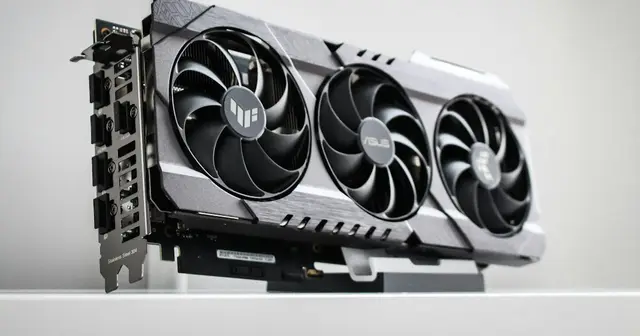
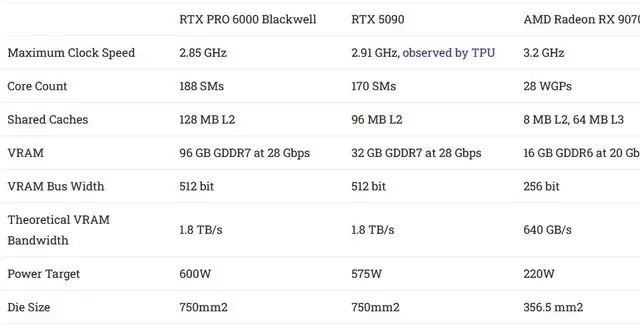
Blackwell GPU: what its architecture means for your workloads
An article published on March 3, 2026 examines the Blackwell GPU and relates it to NVIDIA’s tradition of building large GPUs. The topic can help teams assess hardware requirements for their workloads.
- 17 days ago turingpost.com
Inference hardware in 2026: cost per token and trade-offs
In an article published on February 28, 2026, Turing Post compares inference chips, including GPUs, a programmable LLM accelerator, and an approach that turns models into hardware, focusing on cost per token.
- 17 days ago hgpu.org
HPC++ automates C++ parallelization for CPUs and GPUs
Published on February 22, 2026, the post describes an LLVM-based framework that converts sequential C++ programs into parallel implementations for multicore CPUs and OpenCL-compatible GPUs.
- 17 days ago tunbury.org
ONNX inference: comparing CPU and GPU
Published on March 11, 2026, the article compares ONNX Runtime inference on an NVIDIA L4 GPU and an AMD EPYC 9965 CPU. The author reports that OCaml and memory placement with libnuma made CPU inference faster than using scarce GPUs at TESSERA.
- 17 days ago tensara.org
CUDA array-sum kernels: from example to practice
Published on November 16, 2025, Tensara’s article introduces beginners to writing a simple CUDA kernel for adding arrays. The example can be a starting point for evaluating GPU workloads.
- 17 days ago paulwillchan.com
CUDA/PTX matmul kernel reports 6% gain on B200
A post published on April 27, 2026 describes a pure CUDA/PTX matrix multiplication kernel that reportedly outperformed cuBLAS by 6% on a B200 with M=N=K=8192.
- 17 days ago docs.nvidia.com
CuTe layouts help explain shapes and strides
A NVIDIA post published on February 3, 2026 recommends layout algebra tutorials for understanding how CuTe represents tensors.
GPU kernel optimization beyond SASS latency tables
A post published on November 25, 2025 questions the value of SASS latency tables extracted with nvdisasm and cites 3–4% gains from instruction reordering, against a theoretical limit of 10%.
- 17 days ago siboehm.com
Iteratively optimizing CUDA matrix multiplication
In an article published on February 26, 2026, Simon Boehm describes optimizing a CUDA kernel to approach cuBLAS performance, not to replace it.
- 17 days ago x.com
Input padding to reuse variable-size CUDA graphs
In a post published on February 26, 2026, the author recommends padding inputs to nearby size ranges and creating a family of CUDA graphs to reduce recompilations in inference workloads with variable sequence lengths.
- 17 days ago x.com
CUDA kernel patterns for optimizing workloads
A February 25, 2026 post covers reduction, 1D convolution, histograms, and numerically stable softmax as core CUDA kernel patterns.
- 17 days ago github.com
Penny: GPU communication in an open-source library
The Penny repository, published on October 26, 2025, presents a hand-crafted GPU communication library that is open to the community. Companies can assess its fit through controlled testing.
- 17 days ago x.com
64-bit pointers and bindless GPU access
A post published on April 6, 2026 compares buffer access models in GPU APIs and describes differences in their support.
- 17 days ago developer.nvidia.com
CUDA warp primitives: opportunities to optimize GPUs
In an article published on March 4, 2026, NVIDIA Technical Blog explains how groups of threads called warps execute under the SIMT model and how CUDA programs can make use of this behavior.
- 17 days ago github.com
pyptx brings PTX kernels to Python workflows with JAX and PyTorch
Published on April 25, 2026, the pyptx repository presents a Python DSL for NVIDIA PTX kernels, with Hopper and Blackwell support and examples of accelerated computing operations.
Red Hat introduces the fundamentals of GPU programming
Published on November 26, 2025, the first post in a four-part series gives an overview of the GPU programming model and points to Cornell University's GPU architecture roadmap.
- 17 days ago hgpu.org
Agentic RL for generating high-performance CUDA kernels
A March 4, 2026 post presents CUDA Agent, a large-scale agentic reinforcement learning system for generating CUDA kernels, a task that requires specialized hardware knowledge.
- 17 days ago khronos.org
Vulkan 1.1 subgroups: parallelism on the GPU
In a tutorial published on March 4, 2026, Khronos explains how Vulkan 1.1 subgroups let parallel GPU tasks share and manipulate data.
- 17 days ago developer.nvidia.com
Matrix transposition in CUDA using shared memory
In a post published on February 26, 2026, Mark Harris on the NVIDIA blog explains how shared memory can improve matrix-transposition performance in CUDA C/C++.
- 17 days ago x.com
Scaling LLM training: parallelism choices
A playbook published on April 6, 2026 describes parallelism strategies for training LLMs on GPU clusters, drawing on 4,000 experiments with up to 512 GPUs.
- 17 days ago hgpu.org
FP4 training of MoE models on Hopper GPUs
Published on March 8, 2026, the page discusses FP4 training for large-scale MoE models on Hopper GPUs and identifies activation memory and communication among experts as bottlenecks.
- 17 days ago hgpu.org
VOLT: designing an open-source GPU compiler
Published on February 8, 2026, the article presents VOLT, an open-source GPU compiler, and discusses emerging open GPU architectures with SIMT features.
- 17 days ago rastergrid.com
Vulkan: memory barriers and image layouts
In a post published on March 3, 2026, RasterGrid explains memory barriers and image layouts in Vulkan, topics relevant to GPU memory synchronization.
- 17 days ago nvidia.fr
GPU optimization: from research to measurement
A publication dated July 4, 2026, collects articles and talks on GPU performance, covering loop unrolling, latency hiding, dense linear algebra, and GPU memory.
- 17 days ago x.com
256-bit arithmetic in CUDA GPU kernels
A post dated September 22, 2025, presents 256-bit multiplication and addition on a GPU and covers multiword arithmetic in CUDA kernels.














Let's assess your project

I reply with scope and a proposal.