


AI and infrastructure news
- C and C++Article
x86-64 stack frames: practical applications for debugging
An article by Eli Bendersky, published on March 2, 2026, about how function calls use the stack in x86-64 and how a stack frame is laid out.
- AI agentsProject
Stop hooks can keep agents on longer tasks
An Anthropic post dated December 27, 2025 describes using a stop hook to ask an agent to continue after it stops, presenting the technique as support for orchestrating longer tasks.
- AI agentsPaper
StructMem proposes temporal hierarchical memory for agents
Published on April 24, 2026, the StructMem paper proposes hierarchical memory for long-term conversational agents, with event relationships intended to support temporal reasoning and multi-hop questions.
- CUDA and GPU programmingArticle
Vulkan 1.1 subgroups: parallelism on the GPU
In a tutorial published on March 4, 2026, Khronos explains how Vulkan 1.1 subgroups let parallel GPU tasks share and manipulate data.
- LLM inferencePost
SWAA proposes more efficient inference for long contexts
A post dated December 15, 2025 describes training-free recipes to adapt full-attention language models to linear scaling and recover performance.
- HardwareArticle
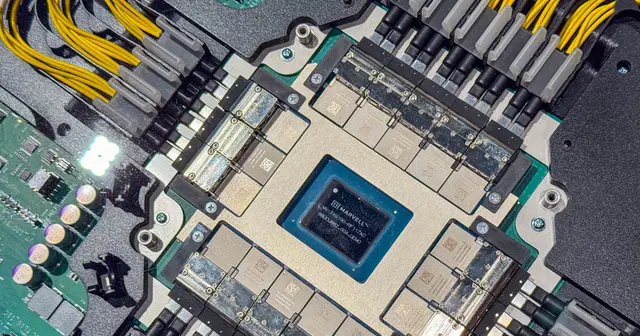
Liquid-cooled CPO switch: implications for networks
ServeTheHome reports that Marvell's TX9190 CPO switch, featuring liquid cooling, was demonstrated at OCP 2025 on October 21, 2025.
- AI agentsPaper
TACO proposes context compression for terminal agents
The paper describes a framework that learns context-compression rules from terminal-agent interactions and reports tests on three benchmarks.
- Training and fine-tuningPost
TC-JEPA: captions guide visual learning
A post published on May 9, 2026 describes a self-supervised method that uses captions to guide the prediction of masked image patches. According to the post, the approach improves training stability and visual reasoning compared with contrastive methods.
- HardwareArticle
TCL announces a 4K, 240 Hz OLED+ monitor
On March 5, 2026, TCL announced the 32X3A monitor, described as OLED+ with 4K resolution, a 240 Hz refresh rate, and an ultra-thin design.
- HardwareArticle
TDIMM DDR5: evaluating high-capacity memory
Tachyum announced an open-source TDIMM DDR5 memory standard. The linked page mentions up to 1 TB per DIMM and 231 GB/s of bandwidth, figures that may inform architecture assessments.
- HardwareArticle
TDIMM DDR5: open memory technology for AI workloads
In a post published on November 26, 2025, Tachyum announced open-source TDIMM technology compatible with DDR5 and stated bandwidth of 281 GB/s, modules of up to 1 TB, and nodes of up to 3 PB.
- LLM inferenceArticle
Techniques for optimizing Transformer inference
A blog post published on December 24, 2025 describes Transformer inference techniques: MXFP4 quantization, tensor and expert parallelism, and dynamic sliding windows.
- Attention and model architectureArticle
Techniques for more efficient LLM serving
Class notes published on May 13, 2026 cover quantization, sparsity, attention, speculative decoding, and batching to improve LLM inference and serving.
- LLM inferenceProject
Tencent presents HPC-Ops operators for LLM inference
On January 27, 2026, Tencent presented HPC-Ops, an open-source library of operators for LLM inference, with GPU operations and multinode communication support.
- Attention and model architecturePaper
Tensor Product Attention proposes reducing KV cache memory
Published on October 27, 2025, the article presents an attention technique using contextual low-rank components to reduce KV cache memory use during inference.
- HardwareArticle
CPU testing with Python and cocotb: from simulation to validation
Published on December 11, 2025, the article presents a way to test the Mrav CPU with cocotb and Python scripts, including a class for modeling RAM.
- Training and fine-tuningArticle
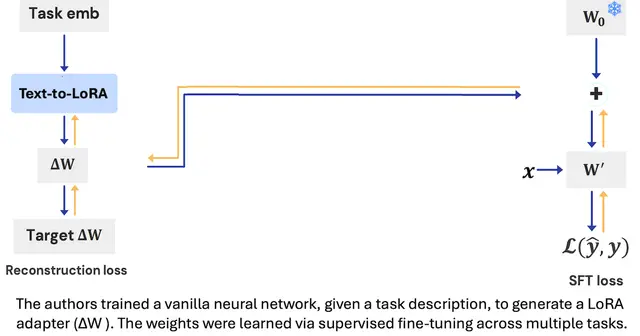
Text-to-LoRA generates adapters from descriptions
Published on October 21, 2025, Sakana AI's study presents a method for generating task-specific LoRA adapters from natural-language descriptions and evaluates its results across 479 tasks.
- Training and fine-tuningPost
Tile Kernels optimize GPU operations for LLMs
On April 23, 2026, the company published GPU kernels developed with TileLang for LLM operations and said some are used in its internal training and inference.
- LLM inferenceArticle
TokenSpeed highlights inference optimizations for agents
Published on May 24, 2026, the text describes an inference engine for agentic workloads, with compiler-supported parallelism, a high-performance scheduler, constrained reuse of KV resources, and pluggable kernels for heterogeneous accelerators.
- LLM inferenceArticle
Tool calling with local models: from guide to application
Published on February 5, 2026, Unsloth’s guide presents examples of tool calls with local open models, including Python, terminal commands, and mathematics.
- Reinforcement learningPaper
Expert trajectories for training language models
On October 31, 2025, a publication presented a method that uses expert trajectories to teach small language models to reason about difficult problems.
- Attention and model architecturePost
Loop transformer reaches 100% on Sudoku-Extreme
A publication dated June 1, 2026 describes a compact, 800,000-parameter loop transformer that scored 100% on Sudoku-Extreme after 15 minutes of training.
- CUDA and GPU programmingDocs
Matrix transposition in CUDA using shared memory
In a post published on February 26, 2026, Mark Harris on the NVIDIA blog explains how shared memory can improve matrix-transposition performance in CUDA C/C++.
- Reinforcement learningArticle
RL training: data and infrastructure risks
Published on November 5, 2025, the publication argues that noisy feedback and complex infrastructure can make RL training unstable.
- CUDA and GPU programmingPost
Scaling LLM training: parallelism choices
A playbook published on April 6, 2026 describes parallelism strategies for training LLMs on GPU clusters, drawing on 4,000 experiments with up to 512 GPUs.
- CUDA and GPU programmingArticle
FP4 training of MoE models on Hopper GPUs
Published on March 8, 2026, the page discusses FP4 training for large-scale MoE models on Hopper GPUs and identifies activation memory and communication among experts as bottlenecks.
- LLM inferenceProject
Training neural networks on the Neural Engine: evaluating the ANE repository
Published on March 2, 2026, the ANE repository describes neural network training using private APIs reverse-engineered from Apple's Neural Engine. Learn how to evaluate this approach before adopting it.
- Speech: TTS and ASRArticle
TTS for More Accurate Pronunciation of Structured Data
In a June 10, 2026 post, Gradium says an update to its TTS model improves pronunciation of spelled-out words, acronyms, email addresses, phone numbers, and codes.
- C and C++Article
Topic-based C++ tutorials can guide technical training
On May 27, 2026, LearnCpp presented free C++ tutorials organized by category. Companies can use this structure to plan internal learning paths and track skills.
- RAG and retrievalArticle
UltraRAG 3.0 structures RAG workflows with YAML
Published on January 27, 2026, the UltraRAG 3.0 repository presents a lightweight, research-oriented framework that combines MCP servers with configurable YAML workflows.
- Speech: TTS and ASRProject
UNITTS combines inference and benchmarking for speech synthesis
A post dated June 9, 2026 presents UNITTS, a toolkit for inference and benchmarking of open-source TTS models, with support for Chatterbox and Fish Audio s2-pro.
- RAG and retrievalPaper
UniversalRAG routes queries for multimodal retrieval
Published on January 14, 2026, the text describes a framework that routes queries to modality-specific corpora and retrieves knowledge across modalities and levels of granularity.
- Training and fine-tuningArticle
Unsloth: fine-tuning embedding models
On January 22, 2026, Unsloth documentation presented a guide to fine-tuning embedding models, including a Colab notebook for a 300-million-parameter model.
- Attention and model architecturePost
URM combines recurrence and nonlinearity for reasoning
A post on Universal Transformer research attributes reasoning gains to recurrent inductive bias and strong nonlinearity, and describes design choices for local token mixing and training.
- C and C++Article
Valgrind: diagnosing memory, thread, and performance issues
The Valgrind manual describes tools for detecting memory-management and threading bugs and for detailed program profiling.
- C and C++Article
Value speculation and latency-sensitive code optimization
Francesco Mazzoli’s article, published on March 1, 2026, discusses value speculation as a technique for overcoming L1 cache limitations and optimizing latency-sensitive code.
- Training and fine-tuningArticle
LoRA variants: comparing parameter-efficient tuning strategies
Published on April 26, 2026, the Turing Post article presents more than 15 LoRA variants, including QLoRA, DoRA, and Mixture-of-LoRA-Experts, and traces the evolution of parameter-efficient fine-tuning for large language models.
- HardwareArticle
Leak points to Ryzen 9 with 192 MB of L3 cache
A TechPowerUp article published on October 21, 2025, reports a possible 16-core processor with 192 MB of L3 cache and a 200 W TDP.
- C and C++Paper
Verifying stack limits in C programs
A 2014 article by Q. Carbonneaux and coauthors addresses end-to-end verification of stack usage limits in C programs, a practical topic for teams that need to control memory resources.
- Training and fine-tuningPaper
VL-JEPA proposes a different way to predict text for visual tasks
An article published on December 26, 2025 describes VL-JEPA, which predicts continuous target-text embeddings and aims to prioritize task meaning while reducing sensitivity to wording variations.
 arxiv.org

 unsloth.ai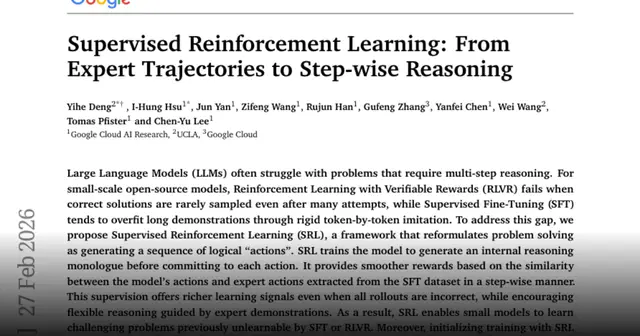
 hgpu.org




Let's assess your project

I reply with scope and a proposal.