


AI and infrastructure news
- HardwarePost
Exaviz board brings PoE and 2.5 Gbps uplink to compact NAS/NVR
Published on February 14, 2026, the report describes a Raspberry Pi Compute Module 5 board with eight PoE ports and a 2.5 Gbps uplink, designed for compact NAS or NVR builds.
- Speech: TTS and ASRPost
Pocket TTS: speech synthesis on laptops without a GPU
In a post published on January 13, 2026, Kyutai Labs introduced Pocket TTS, a 100-million-parameter speech synthesis model with voice cloning that runs on a laptop without a GPU.
- C and C++Article
Pointer compression in V8: heap reduced by up to 43%
A V8 article published on March 1, 2026 explains how pointer compression can reduce heap size by up to 43% in a production JavaScript engine.
- CUDA and GPU programmingPost
64-bit pointers and bindless GPU access
A post published on April 6, 2026 compares buffer access models in GPU APIs and describes differences in their support.
- C and C++Article
Why CPUs have multiple cache levels—and why it matters
In an article published on February 27, 2026, Fabian Giesen explores why CPUs have multiple cache levels, a topic relevant to engineers analyzing performance.
- C and C++Post
Unix portability: comparing system calls
A May 5, 2026 post describes APUE portability tables for comparing system calls across Linux, BSD, macOS, and Solaris—a useful reference for planning cross-platform software.
- SecurityPost
Post warns of AI-orchestrated intrusion attempts
Published on June 3, 2026, the post says AI agents connected to scanners, shells, and other tools could make intrusion workflows more repeatable and less costly.
- SecurityArticle
Post raises risks in judicial-data extraction and automation
Published on May 17, 2026, the post alleges that a tool extracts court cases, enriches data with information from Serasa, and sends WhatsApp messages. It also mentions HWID-based licensing and communication with a central server every 30 seconds.
- LLM inferencePost
Post assesses inference on two RTX Pro 6000 GPUs
Published on April 29, 2026, the post claims that a language model's experts are already quantized to 4 bits and could fit on two RTX Pro 6000 GPUs; it points to missing SM120 support in two serving options.
- RAG and retrievalPost
Post compares ColBERTv2 and Qwen3-Embed-8B for retrieval
Published on February 27, 2026, the post claims that 100-million-parameter ColBERTv2 surpasses Qwen3-Embed-8B and highlights BM25 with reranking as a relevant baseline.
- OCR and document AIPost
PP-OCRv6: multilingual OCR at the edge
In a June 11, 2026 publication, Baidu presents PP-OCRv6, with claimed support for more than 48 languages and three model sizes for edge deployment.
- SecurityArticle
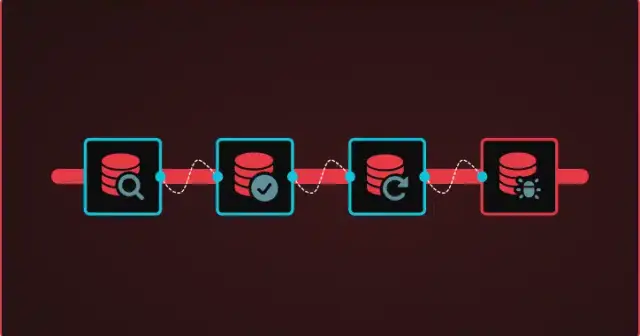
Praetorian uses AI agents to generate Nuclei templates for CVE detection
Praetorian describes a multi-agent pipeline that turns CVE research into validated Nuclei detection templates, using specialized agents and an actor-critic refinement loop.
- C and C++Post
C practice can structure technical training
A repository collects C practice projects from beginner to advanced levels, suggesting a way to organize programming exercises within companies.
- HardwareArticle
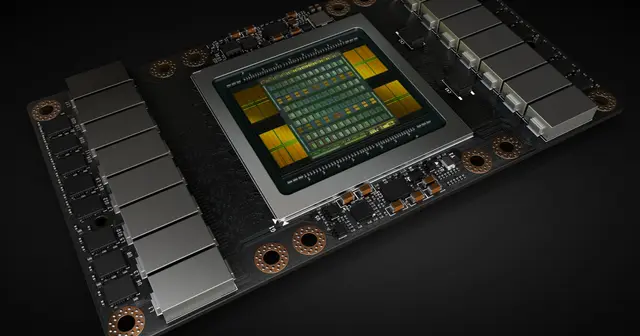
Battlematrix preview points to 192 GB of GPU memory
On December 1, 2025, StorageReview presented Intel Project Battlematrix, a multi-GPU workstation design with 192 GB of GPU memory for local AI.
- CUDA and GPU programmingDocs
CUDA warp primitives: opportunities to optimize GPUs
In an article published on March 4, 2026, NVIDIA Technical Blog explains how groups of threads called warps execute under the SIMT model and how CUDA programs can make use of this behavior.
- Training and fine-tuningPost
South Korean program sets requirements for model training
Published on December 31, 2025, the article describes three requirements for teams in a South Korean model-training initiative: training from scratch, allowing some commercial use, and pursuing ambitious goals.
- HardwareArticle
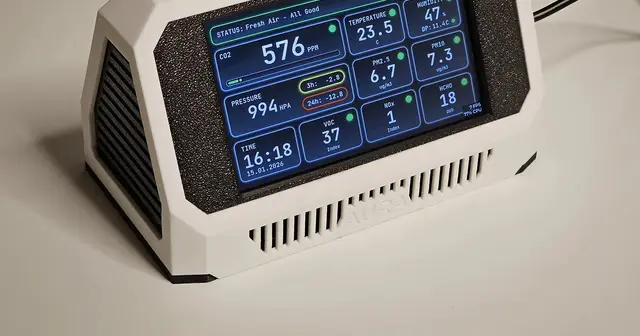
Project Aura: an ESP32-S3 air quality monitor
Published on February 16, 2026, this project combines environmental sensors, a touchscreen, and Home Assistant integration in an ESP32-S3-based DIY monitor.
- Reinforcement learningPost
Long prompts: recursive processing with code
An MIT post published on January 6, 2026 describes models using a Python interface to filter and recursively process segments of long prompts.
- CUDA and GPU programmingProject
pyptx brings PTX kernels to Python workflows with JAX and PyTorch
Published on April 25, 2026, the pyptx repository presents a Python DSL for NVIDIA PTX kernels, with Hopper and Blackwell support and examples of accelerated computing operations.
- Training and fine-tuningDemo
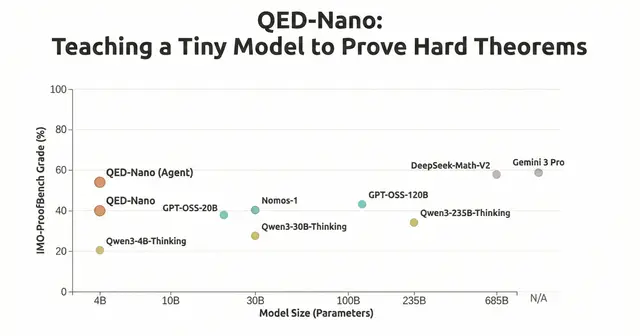
QED-Nano: what a 4B model can teach us about mathematical proofs
A post published on February 15, 2026 presents QED-Nano, a project to train a 4-billion-parameter model to prove olympiad problems, with material on training, datasets, and implementation.
- Training and fine-tuningPost
QLoRA fine-tuning with 50 outputs from a teacher model
A post published on February 24, 2026 describes a local demonstration using 50 GPT-5.2 outputs to fine-tune a 3-billion-parameter Llama model with QLoRA.
- RAG and retrievalPost
Binary quantization cuts embeddings from 4,096 to 128 bytes
A post published on March 19, 2026 describes a technique that represents each embedding dimension with one bit, reducing a 4,096-byte vector to 128 bytes.
- C and C++Article
MXFP8 quantization on B200 exceeds 6 TB/s
A post published on January 27, 2026 describes a CuTeDSL MXFP8 quantizer for B200 that exceeds 6 TB/s by writing scale factors directly into the compressed layout.
- C and C++Article
Use-after-free race in epoll and its RCU fix
A post published on May 26, 2026 describes a race in fs/eventpoll.c and a change that deferred memory release using RCU.
- Attention and model architectureProject
Compact reasoning could lower inference costs
A post published on April 22, 2026 describes Latent Reasoning Tuning, a method that trains models to reason with compact internal representations and claims gains over other efficient reasoning methods on mathematics and general benchmarks.
- RAG and retrievalPaper
RAG: More documents may reduce reliance on larger LLMs
A CMU researchers’ paper, dated January 14, 2026, evaluates expanding the retrieval corpus as an alternative to scaling up the model. According to the post, a medium-sized model with more documents may match a larger model with a smaller corpus.
- LLM inferenceProject
Community recipes for serving LLMs on RTX GPUs
Published on May 24, 2026, the repository collects model-independent configurations for serving LLMs on RTX 3090, 4090, and 5090 GPUs, using vLLM, llama.cpp, and ik_llama.
- Training and fine-tuningDocs
RL recipes to evaluate model training
Documentation published on February 25, 2026, presents reinforcement-learning training recipes for mathematical reasoning, code generation, and tool use.
- AI agentsPaper
ReCode combines planning and action in LLM agents
Published on December 13, 2025, the article presents ReCode, a recursive code-generation approach that lets LLM agents switch between strategic planning and detailed actions.
- Training and fine-tuningPost
Stepwise rewards for flow matching training
A description published on February 15, 2026 presents TurningPoint-GRPO, a framework that identifies steps with sign changes in local reward to capture long-term dependencies.
- Speech: TTS and ASRPost
Evaluating speech recognition for distant audio
On June 10, 2026, Cohere said its open speech-recognition model ranked first on the Far-Field ASR benchmark. The result may inform evaluations of systems for distant audio.
- Speech: TTS and ASRProject
Speech recognition across more than 1,600 languages
On November 10, 2025, Meta announced open-source speech recognition models and a dataset covering more than 1,600 languages, including 500 described as previously unsupported.
- SecurityProject
Cybersecurity resources: posts, papers and tools
A GitHub list gathers blog posts, writeups, papers and cybersecurity tools as a starting point for engineers.
- CUDA and GPU programmingDocs
Red Hat introduces the fundamentals of GPU programming
Published on November 26, 2025, the first post in a four-part series gives an overview of the GPU programming model and points to Cornell University's GPU architecture roadmap.
- C and C++Article
A broad C++ reference can support internal standards
Published on May 30, 2026, Frank B. Brokken’s book covers a wide range of C++ topics across more than 1,100 pages and is described as up to date.
- C and C++Video
C++26 reflection could simplify JSON handling in C++
A CppCon 2025 talk presents JSON serialization and deserialization using reflection features proposed for C++26 and the standard library, without macros or manual mapping.
- Reinforcement learningPaper
KL regularization in RL may defy intuitions about diversity
Published on October 24, 2025, the article examines reverse KL and forward KL regularization in reinforcement learning and finds that the usual distinction between mode-seeking and mass-covering does not necessarily apply.
- SecurityArticle
REMnux connects AI agents to over 200 malware analysis tools
Published on February 9, 2026, the article describes an MCP server connecting AI agents to REMnux tools and providing guidance on tool selection and result interpretation.
- Speech: TTS and ASRProject
Open-source repository provides a starting point for voice agents
Published on February 6, 2026, the repository offers a basis for engineers to create voice agents with open-source models.
- RAG and retrievalPost
Sparse retrieval may reduce memory costs for long-context inference
A paper published on June 9, 2026 describes a technique that predicts which KV-cache chunks will be needed, keeping selected chunks on the GPU and offloading the rest.






 arxiv.org


Let's assess your project

I reply with scope and a proposal.