


AI and infrastructure news
- Training and fine-tuningPost
Model distillation: the direction of per-token KL
A systematic study published on October 3, 2026, reports that the direction of per-token KL divergence matters more than rollout policy in on-policy versus off-policy distillation.
- Reinforcement learningPaper
Two-phase distillation for multitask models
A paper published on June 30, 2026 studies consolidating reinforcement-learning specialists into a multitask model through off-policy and on-policy distillation.
- Reinforcement learningPost
On-policy distillation for consolidating specialist models
MOPD trains a student model on its own completions and uses token-level probabilities from multiple teachers to transfer specialist capabilities.
- Speech: TTS and ASRArticle
Local dictation on Ubuntu: assessing Project Myna
In a June 18, 2026 publication, Ubuntu describes Project Myna, a feature planned for Ubuntu 26.10 that aims to insert speech-to-text into the active application, with processing performed locally.
- AI agentsPost
A shell prompt mismatch increased latency in DSH
A post published on August 17, 2026 reports that different prompts in two DSH shell tools triggered a 3.5-second timeout; a change reduced one command's time from 3,600 ms to 158 ms.
- CUDA and GPU programmingArticle
From nvcc to warps: how a CUDA kernel runs
Published on July 8, 2026, the article follows a vector-addition kernel from compilation with nvcc to execution by GPU warps.
- Training and fine-tuningPost
From REINFORCE to GRPO: policy gradient methods for LLMs
An article published on September 24, 2026, presents a progression of policy gradient methods used to train LLMs, from vanilla policy gradient and REINFORCE to PPO, GRPO, and GRPO variants.
- AI agentsPaper
Dockerless proposes verifying patches without execution
Published on June 30, 2026, the paper describes a verifier that assesses coding-agent patches without running them. The proposal targets selecting SFT trajectories and providing rewards for RL, as an alternative to setting up repository-specific environments.
- Reinforcement learningPaper
DreamSmooth smooths sparse rewards in RL
Presented in an ICLR paper published on June 28, 2026, DreamSmooth applies temporal reward smoothing in model-based RL and was evaluated on RoboDesk and Shadow Hand.
- LLM inferencePaper
Dual-Cache: sharing context across LLMs
A paper published on September 26, 2026 presents a latent protocol for transferring information across heterogeneous models by translating KV caches and adding joint mixing between layers.
- Attention and model architecturePost
Dust explores gradient-free transformer training
Published on October 5, 2026, the paper presents Dust, a zeroth-order method using activation perturbations, and reports scaling experiments and comparisons with backpropagation.
- Reinforcement learningPaper
EfficientRollout speeds up RL rollouts for LLMs
A paper dated July 5, 2026 describes system-adaptive self-speculative decoding and reports up to 19.6% faster rollout generation.
- RAG and retrievalPaper
Relevance embeddings for candidate retrieval
A Yandex paper published on July 7, 2026 describes query and item embeddings to retrieve candidates efficiently when relevance scoring is costly.
- RAG and retrievalModel
Multimodal embeddings expand search across visual content
In a post published on August 25, 2026, Tencent describes a model that represents text, images, video, and visual documents in a shared space and claims top results on two benchmarks.
- Training and fine-tuningPaper
EnvACE rehearses the world to train agents
Published on August 9, 2026, the article describes a reinforcement learning method that replaces interactions with external environments with internal rehearsals during agent training.
- Training and fine-tuningPaper
Learning-rate scaling in LLMs may be nonlinear
An article published on June 30, 2026, evaluates learning rates in GPT-2-style models ranging from 22 million to 707 million parameters, trained on 5 billion to 100 billion tokens.
- HardwarePost
ESP32 blocks 537,000 domains with about 50 KB of RAM
A post published on July 20, 2026 describes ESP32 firmware that stores its blocklist in flash and takes about 10 milliseconds to block requests.
- Training and fine-tuningPost
Weight spectra may signal memorization in LLMs
A preliminary analysis published on September 24, 2026, found that the attention matrix K exponent α tracked memorization of random labels during LLM training.
- Attention and model architectureProject
Recurrent state could extend Transformer memory
The description of the Recurrent Looped Transformer, dated September 13, 2026, presents a recurrent decoder that preserves state between tokens to extend the temporal information path.
- SecurityPaper
Study reports code overlap in network filtering systems
A USENIX Security paper reports code overlap between leaked Geedge Networks code and China's Great Firewall, including DNS and RST packet injection.
- AI agentsPaper
EvoRec proposes agents to optimize recommendations
Published on June 30, 2026, the paper presents a multi-agent framework intended to reduce manual optimization of recommendation systems by retaining methods across iterations and exploring ideas beyond a predefined search space.
- SecurityPaper
ExploitGym evaluates AI agents on vulnerability exploitation
The ExploitGym research proposes evaluating whether AI agents can turn vulnerabilities into impacts such as unauthorized file access or code execution.
- LLM inferenceProject
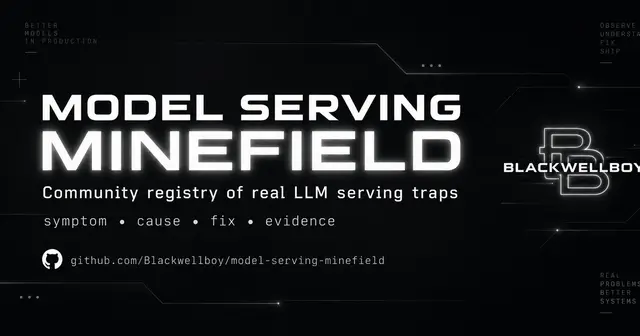
Silent failures in LLM serving: a practical diagnosis
Published on July 28, 2026, the GitHub repository catalogs LLM serving failures, their symptoms, mechanisms, checks, and fixes.
- Attention and model architecturePost
Attention factorization and gradient flow: implications for models
Published on September 30, 2026, the publication discusses how factoring the attention matrix as S = WWᵀ may change gradient flow and remove an information-exponent bottleneck in optimization.
- CUDA and GPU programmingPaper
FIBER proposes separating GPU register ownership from execution
Published on August 21, 2026, the article presents a GPU architecture that decouples register ownership from parallel execution instances.
- Attention and model architecturePaper
Context filtering for attention on constrained hardware
A SAS article published on September 16, 2026 describes an end-to-end trained selector inside Softmax to filter context in attention mechanisms aimed at hardware with limited computing resources.
- Speech: TTS and ASRProject
FireRedAudio combines five speech tasks in one model
Published on August 27, 2026, FireRedAudio combines speech recognition and understanding, speech generation, and speech editing, using distinct representations for audio comprehension and generation.
- Attention and model architecturePaper
FlashAttention-3: optimizing attention on Hopper GPUs
Published on September 24, 2026, the paper presents asynchronous execution and low-precision techniques to accelerate attention on Hopper GPUs, focusing on memory traffic and hardware utilization.
- Attention and model architecturePaper
FlowTracer tracks influential tokens in LLM reasoning
Published on July 4, 2026, the article presents a method that uses attention to trace information propagation and direct credit assignment in reinforcement learning.
- Attention and model architecturePost
Recurrent flows refine reasoning on discrete tasks
A post published on September 3, 2026 describes models combining continuous flows and recurrent refinement to solve structured problems such as Sudoku.
- CUDA and GPU programmingPost
Fork Enables PCIe P2P on GeForce
A post published on August 27, 2026 reports a graphics-driver change enabling peer-to-peer PCIe transfers on GeForce cards while optimizing GPU serving.
- Reinforcement learningProject
FrontierSmith publishes 200 open-ended RL problems
On September 28, 2026, FrontierSmith published a repository of 200 problems for studying reinforcement learning on challenging, open-ended tasks.
- C and C++Video
Using ftrace to observe Linux kernel behavior
A 2018 session by Steven Rostedt introduces Linux kernel tracing with ftrace and covers virtual memory, page tables, and how programs interact with the kernel.
- Attention and model architecturePost
FuncAttn brings functional attention to continuous data
A June 25, 2026 post describes a method using structured linear operators for attention between function spaces, with results in PDE solving, 3D segmentation, and regression.
- Attention and model architecturePost
Functional Attention proposes linear-cost attention
Published on July 6, 2026, the paper describes representing query and key/value fields with learned bases and a compact matrix, reporting linear cost in the number of points.
- C and C++Post
FUTEX_PRIVATE_FLAG and the cost of thread locks
A post dated June 28, 2026 explains how FUTEX_PRIVATE_FLAG may reduce lock latency for threads sharing memory within the same process.
- Attention and model architecturePaper
Gated Linear Attention: linear attention with gates
Published on September 20, 2026, the paper presents a transformer formulation with linear attention and data-dependent gates, also expressible as an RNN with matrix-valued hidden states.
- Training and fine-tuningPost
GEPA adapts a model with prompts and labeled examples
A demonstration published on September 19, 2026 describes using prompts and labeled examples to adapt a model to specific decision criteria.
- AI agentsPaper
Git as shared memory for research agents
A post published on September 17, 2026 describes agents recording verifiable contributions in a searchable Git history to share results and reduce repeated experiments.
- C and C++Article
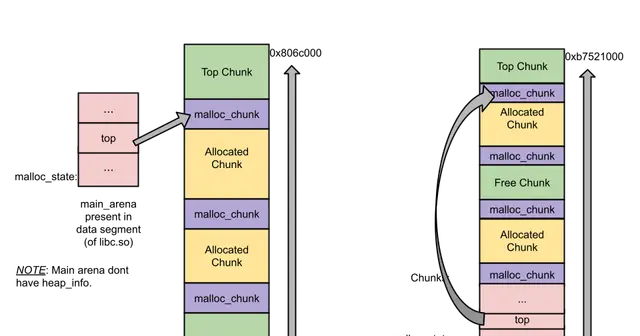
glibc malloc: how to observe memory use
Published on June 25, 2026, the article covers how glibc malloc obtains memory from the kernel and manages the heap. This pauta proposes turning that knowledge into observability for memory-intensive services.
 arxiv.org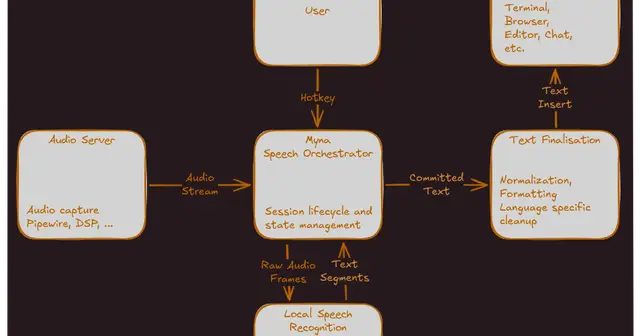




Let's assess your project

I reply with scope and a proposal.