


AI and infrastructure news
- Attention and model architecturePost
GLM-5.3-Flash: an architecture overview
Published on August 26, 2026, the overview describes a hybrid architecture with 3:1 attention, a smaller sparse MoE backbone, a four-stream mHC residual path, and a native vision encoder.
- Attention and model architecturePaper
GOAT proposes trainable priors for attention
Published on October 3, 2026, the paper frames standard attention as an entropic optimal transport problem with an implicit uniform prior and presents GOAT, which uses a continuous, trainable prior.
- CUDA and GPU programmingPost
Two-core GPU on a $30 FPGA: what to assess
Published on July 9, 2026, the article describes a two-core GPU implemented on a $30 FPGA, running AI model inference at 81 MHz.
- CUDA and GPU programmingPaper
GPU-Tile-Sim proposes tile-based GPU simulation for LLM co-design
Published on July 14, 2026, the paper proposes a tile-based GPU simulation framework to support hardware and software co-design for LLMs.
- Attention and model architecturePaper
BF16 gradients rise late in training
A paper reports a 1,000-fold increase in gradient norm after 25 billion tokens in a transformer trained with FlashAttention-3 in BF16.
- RAG and retrievalPaper
GraphRAG for questions across document collections
A paper published on September 24, 2026 presents an approach to answering global questions about a corpus, which standard retrieval of individual passages may not handle well.
- Reinforcement learningArticle
GRPO and OPD: practical paths for post-training
A publication dated August 26, 2026 presents two resources on post-training with reinforcement learning: one on scaling vanilla GRPO and another focused on OPD.
- Reinforcement learningArticle
GRPO for reasoning model training: Unsloth’s guide
Published on September 26, 2026, Unsloth’s guide covers reinforcement learning from beginner to advanced and presents the use of GRPO to train reasoning models.
- Reinforcement learningArticle
A reinforcement learning guide for language models
Published on August 24, 2026, the guide connects reinforcement learning fundamentals to language-model training methods, including policy gradients, REINFORCE, and different ways to define states and rewards.
- Training and fine-tuningProject
GuppyLM: an experiment with a 9-million-parameter model
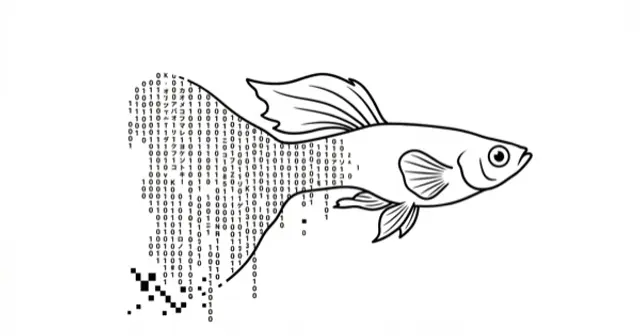
In a post published on September 19, 2026, the author describes GuppyLM, a model with about 9 million parameters that, according to the author, can be trained from scratch in five minutes.
- AI agentsProject
Harness expands browser and computer options for agents
Version v0.1.6-alpha.1, published on September 15, 2026, adds persistent terminals, multiple tabs, MCP support, and experimental options for browser and computer use.
- AI agentsArticle
Harness engineering and the limits of AI self-improvement
In an article published on July 7, 2026, Lilian Weng examines recursive self-improvement and identifies harness design and optimization as a practical starting point, while discussing evaluation, diversity, and security challenges.
- AI agentsPaper
HarnessBank: evolving agent harnesses
An article published on July 17, 2026 describes a method for improving agents by changing prompts, tools, and control loops around the model.
- AI agentsPaper
HASTE shows how to organize skills for ML agents
The material on HASTE reports that, across eight competitions, hierarchical skill loading achieved a 100% medal rate, compared with 62.5% for flat loading.
- Attention and model architecturePaper
HiLS learns chunk selection for sparse attention
Published on July 7, 2026, the paper presents HiLS, an approach that learns chunk selection for sparse attention using the language-modeling loss.
- Attention and model architecturePaper
HOLA pairs linear attention with an exact, bounded KV cache
Published on July 3, 2026, the paper presents HOLA, an architecture combining recurrent state and a bounded key-value cache, with reported gains in perplexity and long-range recall.
- Attention and model architecturePaper
HOLA combines recurrent state and a limited cache for long contexts
A post dated July 6, 2026 describes HOLA, which uses recurrent state and a small KV cache for exact memory. The method reduces perplexity by 16.1% and maintains robust retrieval at 32k tokens.
- LLM inferenceArticle
Inference hooks can block prompts before execution
Material dated August 11, 2026 describes hooks that send prompts to an organization’s safety server, which allows or denies them before inference.
- Attention and model architecturePost
HydraHead combines two attention types per head
Published on June 30, 2026, the post about HydraHead describes an architecture that combines Full Attention and Linear Attention at the head level to pursue greater efficiency in long-context models.
- Attention and model architectureArticle
HySparse2 proposes two-level KV sharing
Dated September 27, 2026, the paper presents a hybrid sparse-attention method intended to reduce prefill demands and compact KV cache storage for agents with long contexts.
- Attention and model architecturePaper
HySparse2 cuts long-context costs through KV reuse
Published on September 23, 2026, the post describes two levels of KV sharing to reduce prefill FLOPs and cache size, with better retrieval scores than MiMo-V2.6's Hybrid SWA at a context length of 1 million tokens.
- Attention and model architectureArticle
Recurrent-depth AI: monitoring challenges
A September 2, 2026 publication says the Astra AI uses recurrent-depth reasoning, which may make monitoring harder, affect costs and performance, and complicate oversight.
- HardwarePost
Local AI: Mac Studio M5 Ultra or RTX PRO 6000?
A comparison of local AI configurations highlights differences in memory, CUDA support, prefill speed, cost, and noise.
- Training and fine-tuningProject
IFM-AI releases open tools for LLMs
On September 28, 2026, IFM-AI announced open-source tools for LLM pre-training, attention, checkpoint conversion, and serving.
- Attention and model architecturePaper
iLLaDA: masked diffusion in an 8B model
A description published on June 25, 2026 presents iLLaDA, an 8B masked-diffusion language model trained from scratch with fully bidirectional attention.
- Attention and model architecturePost
iLLaDA trains an 8-billion-parameter diffusion model
A paper published on June 27, 2026 describes training an 8-billion-parameter Transformer with bidirectional masked diffusion on 12 trillion tokens.
- Speech: TTS and ASRPost
Index compares speech models across three capabilities
Published on June 23, 2026, the Artificial Analysis index combines three evaluation datasets to compare native Speech-to-Speech models.
- CUDA and GPU programmingArticle
GPU indexes expand PyTorch and Python support
An Astral post published on October 5, 2026, reports support for PyTorch 2.13 and 2.14 and Python 3.15, with GPU wheels for packages including FlashAttention and DeepSpeed.
- LLM inferenceProject
LLM inference with limited VRAM
A post dated July 17, 2026 describes a framework for heterogeneous inference and fine-tuning, distributing experts across GPU and CPU.
- Reinforcement learningPaper
Privileged information may affect long reasoning in models
An article dated July 7, 2026 reports degradation in long reasoning trajectories after self-distillation with privileged information, across five models evaluated on AIME.
- SecurityPost
Prompt injection in AI-analyzed binaries
Research from the Naval Postgraduate School, published on July 12, 2026, describes how strings in C binaries can influence language-model reverse-engineering agents.
- SecurityArticle
Authorized inspection of HTTPS traffic with TLS 1.3
An article published on August 29, 2026, explains how to record session secrets using SSLKEYLOGFILE and load them into Wireshark to inspect HTTP requests in captured HTTPS connections.
- SecurityPaper
Intel updates paper on memory protections
On July 1, 2026, Intel updated its technical paper on memory protections in Intel architecture for confidential computing, document 869103.
- Attention and model architecturePaper
Interpretability beyond human concepts
Published on September 22, 2026, the paper investigates whether language models use internal representations that do not map adequately to familiar human concepts.
- Attention and model architecturePost
Automated interpretability for attention heads
A paper published on June 29, 2026 describes a technique that explains attention heads with Python programs. Replacing about 40% of attention patterns in Llama-3B with program outputs had little effect on performance across tasks.
- SecurityPaper
IO Factory and the detection of adaptive influence campaigns
An article published on August 12, 2026 describes an AI framework that simulates coordinated, adaptive campaigns and highlights the challenge of detecting this activity.
- Training and fine-tuningPost
IW-OPD reweights tokens in on-policy distillation
A post published on June 30, 2026 presents IW-OPD, a method that assigns greater weight to early tokens in on-policy distillation and reports a 6.9-point gain over standard OPD on AIME-2025.
- Attention and model architectureArticle
Jagged Flash Attention on NVIDIA Blackwell: lessons for kernel optimization
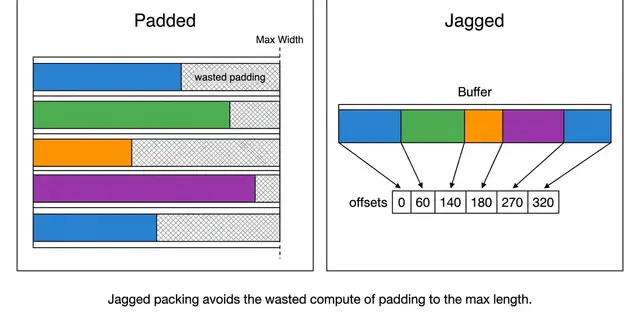
In an article published on October 1, 2026, the PyTorch blog describes an attention kernel developed with TLX for NVIDIA Blackwell. For the jagged shapes in Meta's Generative Ads Model, the article reports performance exceeding FlashAttention-4.
- Attention and model architecturePaper
Jamba combines Transformer, Mamba and MoE
The paper, published on September 20, 2026, describes a hybrid architecture that interleaves Transformer and Mamba blocks and uses mixture-of-experts in some layers.
- AI agentsArticle
JAZ and evaluating recursive agent loops
Published on September 26, 2026, the post describes JAZ, a minimalist framework that uses a single recursive primitive for agent loops, and claims it may outperform Letta and ACE at lower cost.
 arxiv.org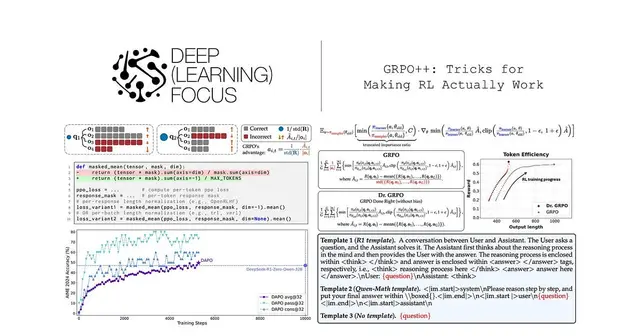
 unsloth.ai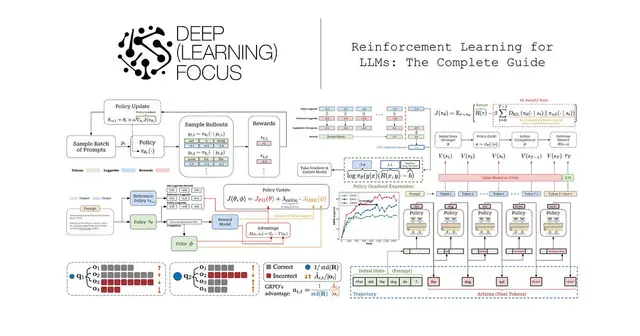





Let's assess your project

I reply with scope and a proposal.