


AI and infrastructure news
- Attention and model architecturePost
Memory Attention: reusing keys in V=K+M
A publication dated September 27, 2026 reports preliminary ablation results suggesting V=K+M is an effective architectural choice; validation at larger scales remains necessary.
- HardwarePost
Meta describes techniques to speed up storage
Published on July 5, 2026, Meta's post presents a storage architecture and performance techniques, including data locality, unified caches, and prefetching.
- Attention and model architecturePaper
MiniCPM-SALA combines sparse and linear attention for long contexts
A paper presents a hybrid architecture with 9 billion parameters and reports good results on long-context benchmarks, with scalable inference up to 1 million tokens.
- Attention and model architecturePaper
Mixture-of-Depths adjusts compute per token in Transformers
An article dated September 22, 2026 presents a method that allocates compute across sequence positions and limits token participation in each layer.
- AI agentsPaper
Byte and token models: scaling results up to 1 trillion bytes
A paper published on September 14, 2026 compares distilled byte and token models and reports a higher performance ceiling for byte models as compute increases.
- Attention and model architecturePost
Flow models refine reasoning in stages
A paper dated September 17, 2026 turns a flow model into a recurrent model: predictions are fed back for iterative refinement, with a local loss at each step and no backpropagation through time.
- Attention and model architectureArticle
Diffusion language models: techniques and applications
Published on July 8, 2026, the Kuleshov Group post presents diffusion language models and discusses masked diffusion, iterative refinement, post-training, and variable-length generation.
- Training and fine-tuningPaper
Mol-JEPA explores multimodal data for molecular models
A post published on August 25, 2026 reports that Mol-JEPA learns from molecular structures, cell phenotypes and binding affinities, with out-of-distribution gains on small ADME datasets.
- C and C++Project
Movfuscator limits C code to the MOV instruction
Published on August 17, 2026, the repository presents a C compiler that generates Turing-complete assembly using only MOV, a useful case for evaluating code analysis tools.
- RAG and retrievalPaper
NapMem proposes active navigation of conversational memory
An article published on July 8, 2026 presents NapMem, a framework that organizes a user's history into a linked memory pyramid with multiple levels of granularity.
- Attention and model architecturePaper
Native Hybrid Attention and the long-context trade-off
An article published on October 5, 2026 presents Native Hybrid Attention, an approach aimed at balancing speed in long contexts with detail retention. Companies can assess the proposal using benchmarks tied to their tasks.
- AI agentsPaper
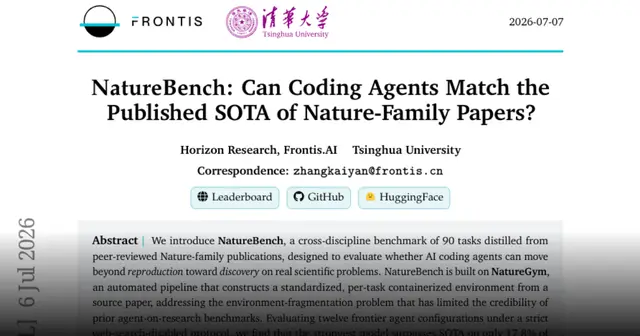
NatureBench evaluates coding agents on research
Published on June 24, 2026, the post describes a benchmark with 90 tasks based on articles from the Nature family. The best agent exceeded the published reference result on 17.8% of tasks.
- RAG and retrievalPaper
Hard negatives for two-tower retrieval
A paper published on July 2, 2026 proposes using LLM-derived item clusters to generate hard negatives in real time for two-tower recommendation models.
- Attention and model architecturePost
NextLat explores predicting the next latent state
A June 16, 2026 publication describes a transformer training method and says it may enable compact world models and up to 3.3× faster inference.
- Training and fine-tuningPost
NoRA proposes normalizing A at LoRA initialization
A post published on September 2, 2026 describes an initialization that normalizes LoRA's A columns and reports higher average results than several adaptation methods in SFT and RLVR.
- AI agentsProject
Code notebooks explore agent design patterns
Published on August 25, 2026, Antonio Gulli’s guide presents notebooks for exploring patterns including prompt chaining, routing, reflection, tool use, planning, and multi-agent systems.
- AI agentsPaper
NOVA applies verified agents to recommendation systems
A description published on June 26, 2026 presents an agent harness for evolving recommendation architectures under domain, interface, resource, and serving constraints.
- OCR and document AIPost
New OCR models expand document-processing options
A post published on September 18, 2026 presents WeVisDoc 2B and 4B under Apache 2.0, and jina-ocr-v1 under a non-commercial license. It reports a 95.38 score for WeVisDoc-4B on OmniDocBench v1.6 and identifies NaviDC-OCR as the current SOTA.
- Speech: TTS and ASRPost
NVIDIA presents diarization for overlapping speech
Announcement dated September 23, 2026: Nemotron 3 Diarization identifies who spoke and when, including in overlapping speech, and supports up to eight speakers.
- Attention and model architectureArticle
The role of chain of thought in serial tasks
An article dated October 1, 2026, examines whether chain of thought contributes computation in Transformers and reports reduced accuracy when it is removed from serial tasks.
- CUDA and GPU programmingPost
What happens when a CUDA kernel is launched
A post published on July 11, 2026, about the CPU-to-GPU communication needed to launch a CUDA kernel and the work involved in that operation.
- Training and fine-tuningArticle
What pretraining a MoE model demands in practice
Published on August 20, 2026, the account documents an attempt to pretrain a 1.02-billion-parameter MoE model on an H200, covering its data pipeline, failures, and throughput tuning.
- SecurityProject
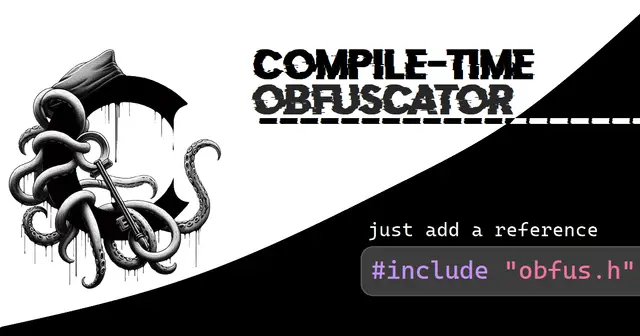
Compile-time C obfuscation on Windows
The obfus.h repository describes a macro header for compile-time C obfuscation on Windows x86/x64 with tcc, including virtualization, anti-debugging, and control-flow obfuscation.
- OCR and document AIProject
OCR for long documents in a single pass
A post published on June 23, 2026 describes an OCR model that processes documents longer than 40 pages in one pass while keeping KV Cache size constant.
- OCR and document AIProject
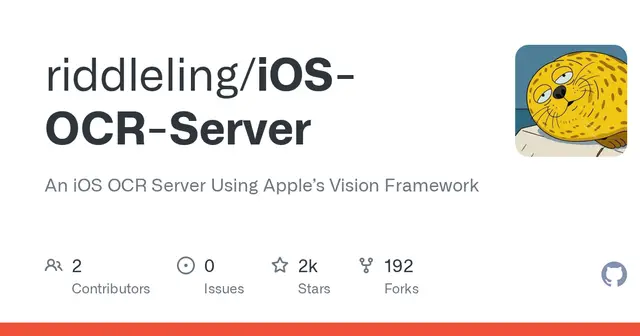
Local iPhone OCR with API access on the network
A post published on August 26, 2026 describes iOS-OCR-Server, an open-source project that uses Apple's Vision framework to process OCR locally on an iPhone and expose an API to devices on the same network.
- AI agentsProject
Octop combines multi-user agents with self-hosting
A Tencent Cloud post published on September 15, 2026, presents Octop, an open-source, self-hosted AI assistant platform with local data storage and team integrations.
- Speech: TTS and ASRProject
OmniVoice: speech synthesis and voice cloning in 600+ languages
A publication dated September 6, 2026 describes a Python speech-synthesis project with zero-shot voice cloning, support for more than 600 languages, and configurable voice controls.
- Training and fine-tuningPaper
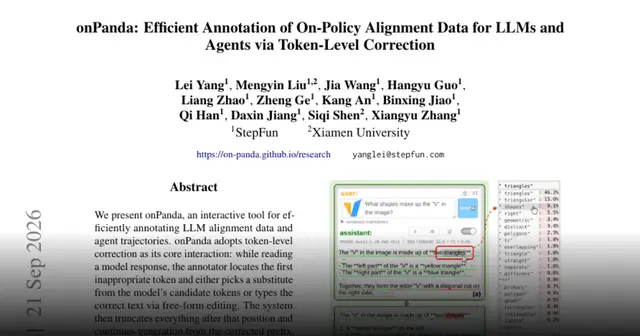
onPanda enables token annotation and model inspection
Published on September 22, 2026, the onPanda repository presents an open-source tool for LLM data annotation and model inspection.
- Attention and model architectureArticle
OPAL lowers attention costs in long contexts
A September 29, 2026 post describes OPAL, a method that trains linear attention models on their own outputs and reports full retrieval recovery and 83–93% of mathematical reasoning performance.
- Training and fine-tuningPaper
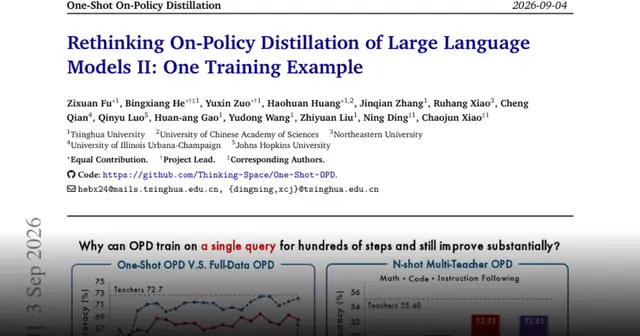
OPD with one query: what the paper proposes
Dated September 29, 2026, the paper tests on-policy distillation with a single training query across math, coding, instruction following, and agentic tool use.
- Attention and model architectureProject
OpenMythos explores a recurrent-depth Transformer
Published on June 19, 2026, the repository presents an open-source theoretical reconstruction featuring recurrent depth, MoE routing, and adaptive halting per token.
- AI agentsProject
OpenShell proposes a secure runtime for autonomous agents
Published on September 28, 2026, the GitHub repository describes OpenShell as a runtime focused on the security and privacy of autonomous AI agents.
- Reinforcement learningArticle
Contraction operators in RL: from concept to internal learning
Published on September 12, 2026, the article presents a visual, concise approach to explaining contraction operators, a fundamental concept in reinforcement learning.
- AI agentsArticle
Ornith-1.0: open models for coding agents
Announced on June 25, 2026, the Ornith-1.0 family spans models from 9B to 397B parameters, trained with reinforcement learning to optimize code and the scaffolds that guide agents.
- Training and fine-tuningPaper
ORPO combines SFT and preference alignment in one stage
Published on September 19, 2026, the paper introduces ORPO, a method that combines supervised fine-tuning and preference optimization without a reference model.
- AI agentsPaper
Agent orchestration can reduce costs and latency
Published on July 13, 2026, the paper reports lower costs and latency with equivalent quality across 22 tasks and six models after changing orchestration.
- Training and fine-tuningPost
Ostris AI Toolkit adds LoRA training for MiniMax H3
On August 3, 2026, the Ostris AI Toolkit repository announced LoRA training support for MiniMax H3, limited to text-to-video and image-to-video workflows, using quantized Comfy weights.
- Reinforcement learningArticle
Optimizing evaluable objectives without RL
A post dated August 27, 2026, opens a series on alternatives to reinforcement learning and introduces sampling methods for optimizing evaluable objectives.
- AI agentsPaper
PACE predicts agent performance with few tasks
A July 6, 2026 post presents a method to estimate agent results from a small task set at lower cost than a full evaluation.
- Speech: TTS and ASRPost
Packed FlashAttention speeds up a Transformer vocoder
A July 20, 2026 publication reports a 48.64% increase in QPS for a Transformer vocoder after waveform reconstruction optimizations.
 arxiv.org




Let's assess your project

I reply with scope and a proposal.